
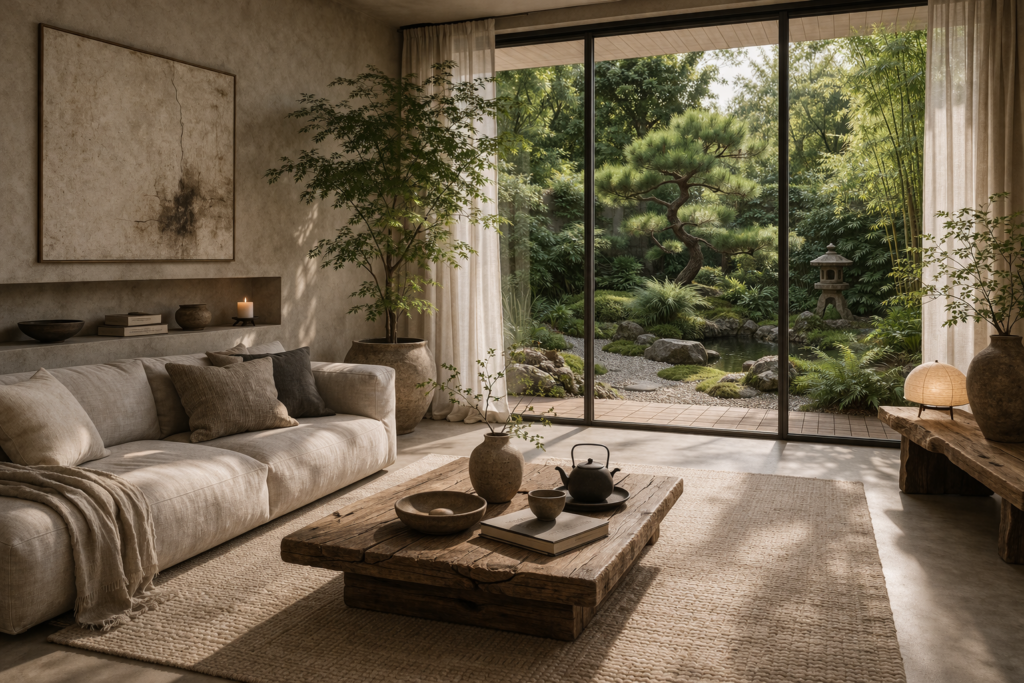
In a world obsessed with perfection, speed, and constant upgrades, there’s a quiet, grounding alternative—one that has existed for centuries.
It’s called Wabi-Sabi.
Rooted deeply in Zen philosophy, Wabi-Sabi invites us to slow down, embrace imperfection, and find beauty in the natural flow of life. And perhaps more importantly, it shows us how to create spaces—and lives—that feel calm, meaningful, and authentic.
What Is Wabi-Sabi?
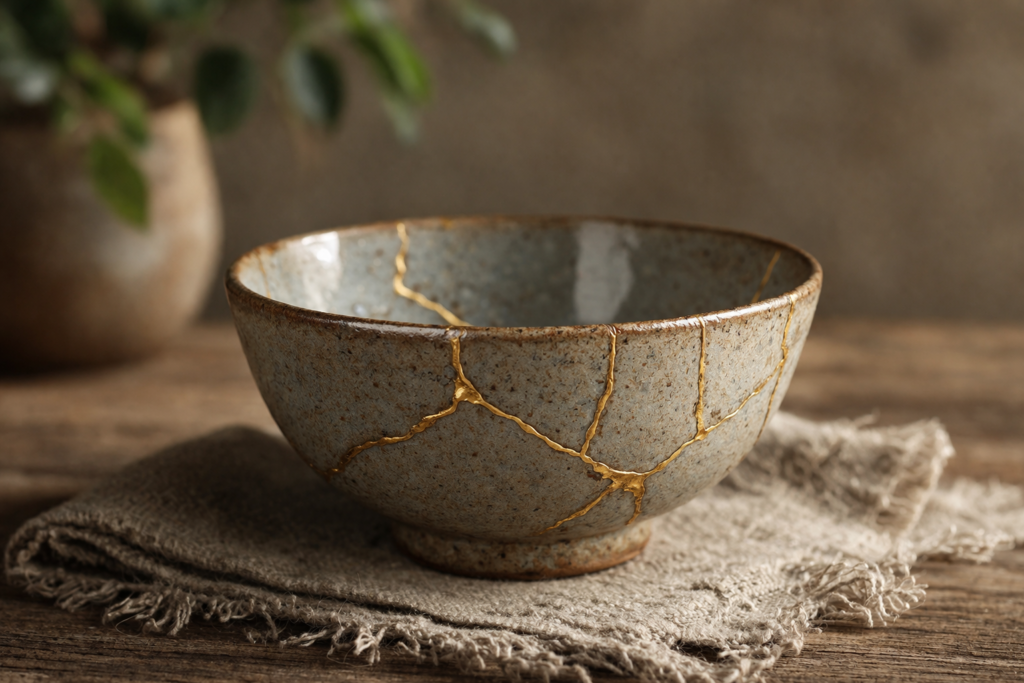
At its core, Wabi-Sabi is a Japanese aesthetic philosophy centered on three simple truths:
- Nothing lasts
- Nothing is finished
- Nothing is perfect
The word itself combines two ideas:
- Wabi — simplicity, humility, and living in harmony with nature
- Sabi — the beauty that comes with age, wear, and passage of time
Together, they form a worldview that sees beauty not in flawlessness—but in authenticity.
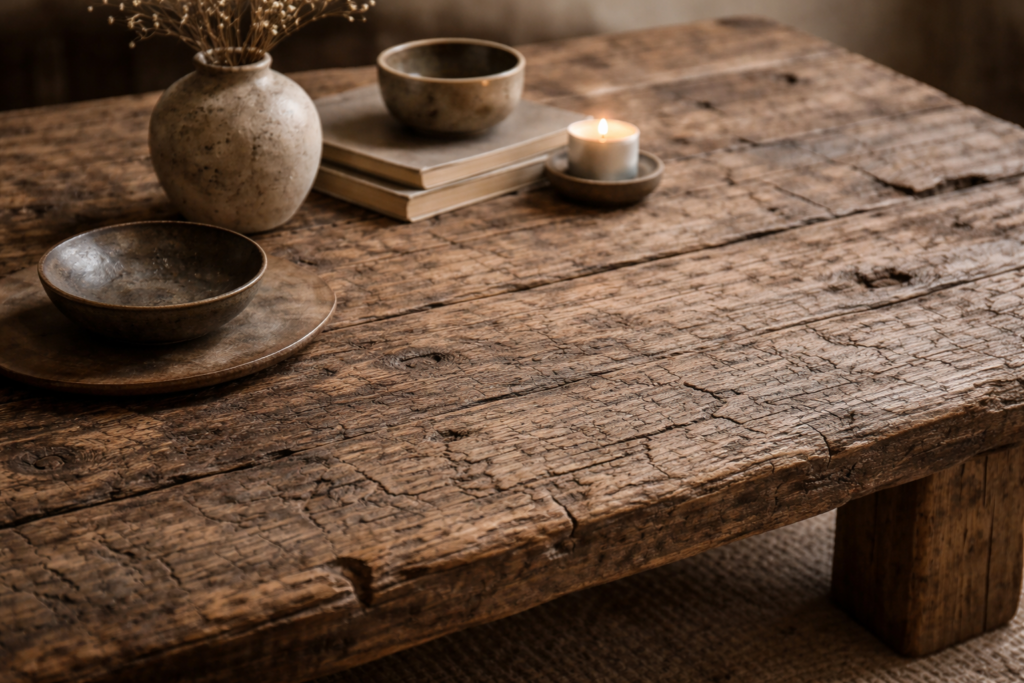
A cracked ceramic bowl repaired with gold (kintsugi), a faded wooden table, a quiet room with soft natural light—these are not “imperfect.” They are alive with history.
The Zen Roots Behind Wabi-Sabi

Wabi-Sabi cannot be fully understood without Zen Buddhism.
Zen emphasizes:
- Presence over distraction
- Experience over theory
- Simplicity over excess
Rather than chasing perfection, Zen teaches us to let go—of control, expectations, and even ego.
This philosophy emerged in Japan around the 12th–13th centuries, heavily influenced by Chinese Chan Buddhism. Over time, it shaped everything from tea ceremonies to architecture, encouraging spaces that are quiet, intentional, and uncluttered.
In Zen, emptiness is not absence—it’s potential.
A Brief History: From Tea Rooms to Timeless Design
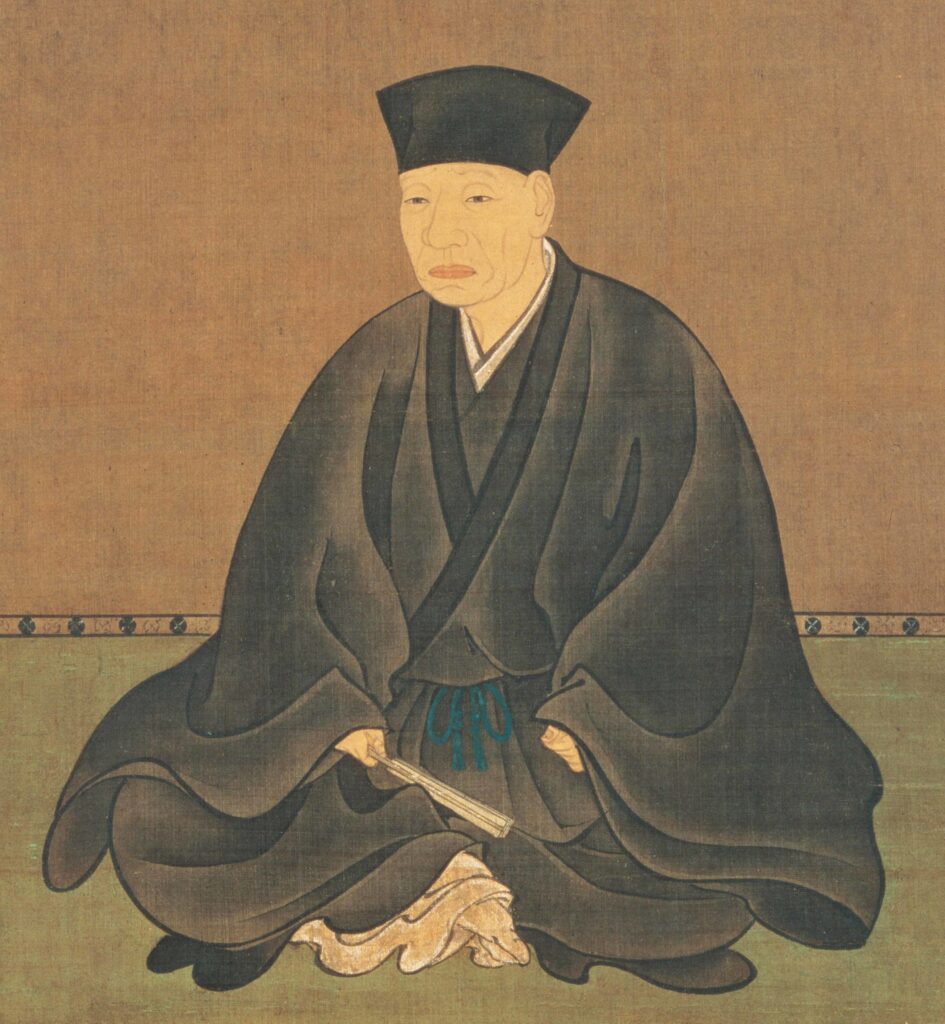
The aesthetic we now call Wabi-Sabi was refined during Japan’s tea culture, especially under tea masters like Sen no Rikyū.
Instead of lavish Chinese imports (once considered status symbols), tea masters began favoring:
- Rough, handmade pottery
- Small, intimate tea rooms
- Natural, unpolished materials
This shift was radical. It redefined beauty as something quiet, modest, and deeply human.
From there, Wabi-Sabi spread into:
- Architecture
- Garden design
- Calligraphy
- Everyday living
And today, it continues to influence modern minimalist interiors around the world.
How to Apply Wabi-Sabi & Zen to Your Daily Life
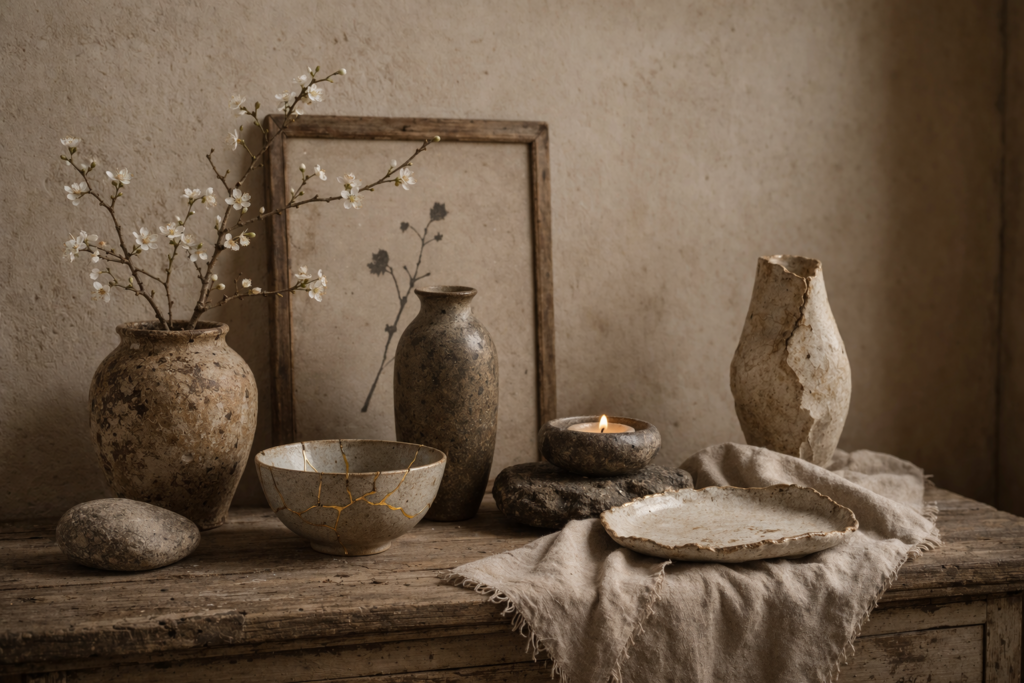
Wabi-Sabi isn’t just a design style—it’s a way of being.
Here’s how to begin:
1. Embrace Imperfection
Stop waiting for things to be “just right.” Whether it’s your home, your work, or yourself—allow space for flaws.
2. Slow Down
Create small rituals: morning tea, journaling, or simply sitting in silence.
3. Let Go of Excess
Zen teaches that clarity comes from removing—not adding.
Ask yourself: What can I live without?
Designing a Wabi-Sabi Inspired Home
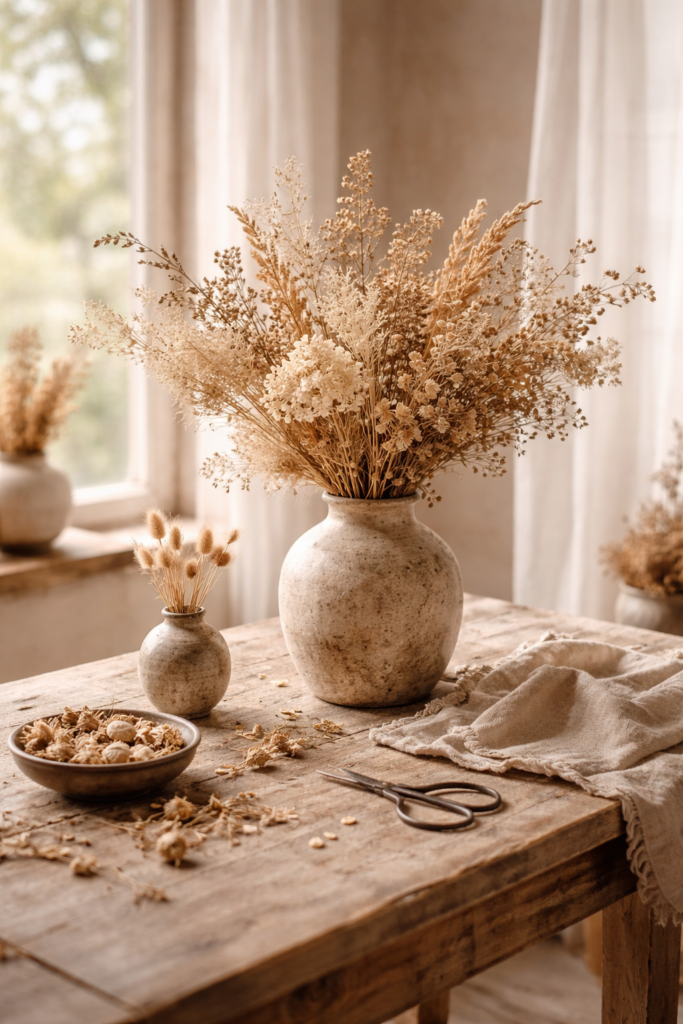
You don’t need to redesign your entire home to embrace Wabi-Sabi. Small, intentional choices can make a big difference.
❃ Use Natural Materials
Think wood, linen, clay, stone. Materials that age gracefully.
❃ Choose Fewer, Meaningful Objects
Instead of filling space, curate it. Let each object have a story.
❃ Highlight Imperfection
Handmade ceramics, uneven textures, worn finishes—these create warmth and authenticity.
❃ Let Light and Space Breathe
Avoid clutter. Empty space is part of the design.
❃ Stick to Earthy, Muted Colors
Soft whites, greys, browns, and greens help create a calm atmosphere.
Why This Philosophy Matters Today
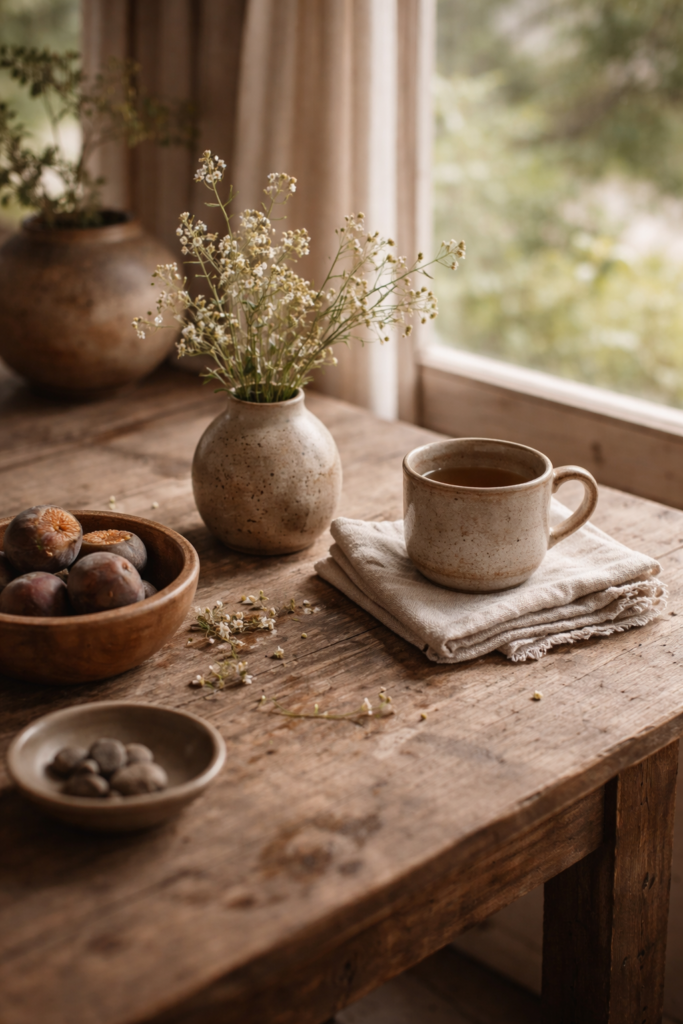
Modern life often pushes us toward:
- Perfection
- Productivity
- Constant consumption
Wabi-Sabi and Zen offer something radically different:
❖ Contentment with what is
❖ Beauty in the ordinary
❖ Peace in simplicity
And when reflected in your home, this philosophy transforms your space into something more than just aesthetic—it becomes restorative.
Recommended Reading
If you’d like to explore these ideas more deeply, these books are excellent starting points:
❃ Zen in the Art of Archery — Eugen Herrigel
A classic introduction to Zen through the practice of archery.
❖ https://amzn.to/4ccJ5Wi
❃ Wabi Sabi: Japanese Wisdom for a Perfectly Imperfect Life — Beth Kempton
A modern, accessible guide to applying Wabi-Sabi in everyday life.
❖ https://amzn.to/47QNf3N
❃ Wabi Sabi: The Japanese Art of Impermanence — Andrew Juniper
A deeper exploration of the cultural and philosophical roots of Wabi-Sabi.
❖ https://amzn.to/4bHu26V
❃ Wabi-Sabi for Artists, Designers, Poets, & Philosophers — Leonard Koren
A must-read for creatives looking to translate philosophy into design.
❖ https://amzn.to/4diESkY
❃ The Book of Tea — Okakura Kakuzo
A poetic exploration of Japanese aesthetics through tea culture.
❖ https://amzn.to/4dRM9bB
Final Thoughts
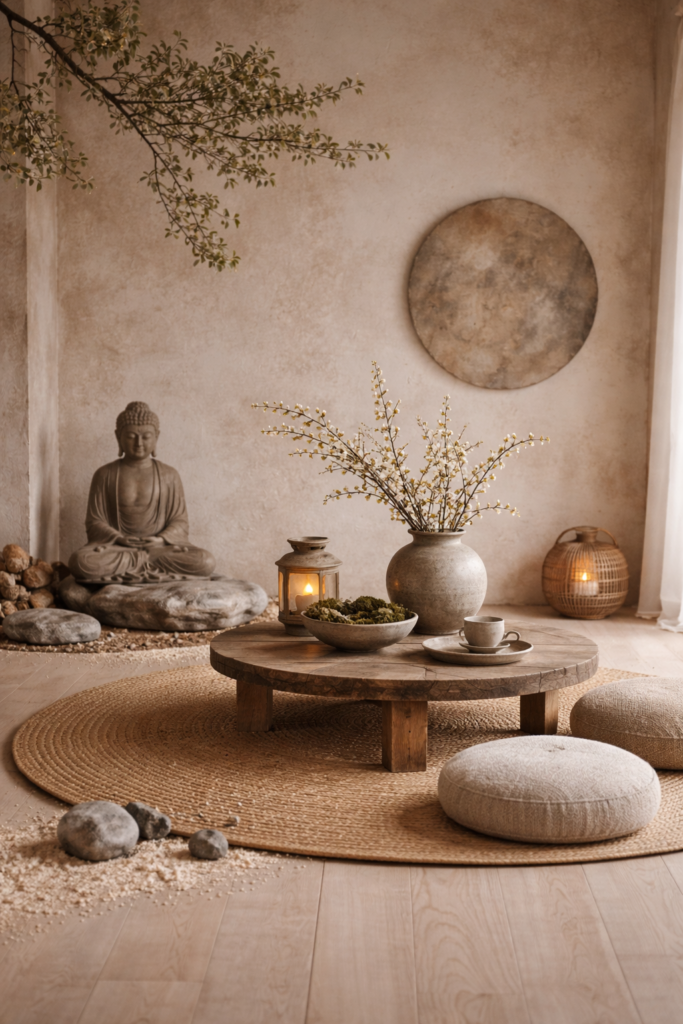
Wabi-Sabi and Zen aren’t trends—they’re timeless perspectives.
They remind us that:
- A home doesn’t need to be perfect to be beautiful
- A life doesn’t need to be optimized to be meaningful
Sometimes, the most powerful transformation begins not by adding more—but by letting things be.
This post may contain affiliate links. If you purchase through them, we may earn a small commission at no extra cost to you.